A Saturday free (apart from those pesky e-mails) in Trinidad provided a great opportunity to get to know the island a little better (e-mails should be for offices, and people with nothing better to do!). Thanks to Clint Ross for taking Marcel and me on pot-holed roads, through torrential rain, and avoiding the snake on the way… It has to be one of the first times I have ever taken a spare day after a conference to go exploring. I must learn to do this more often. Sorry to all of those still wanting a reply to an e-mail – I’m thinking of revising my policy specifically to exclude sending e-mails at the weekend! I will have to find time to come back to the Asa Wright Nature Centre and go for long walks in the hills…
Findings from research on mobile use amongst marginalised groups in China
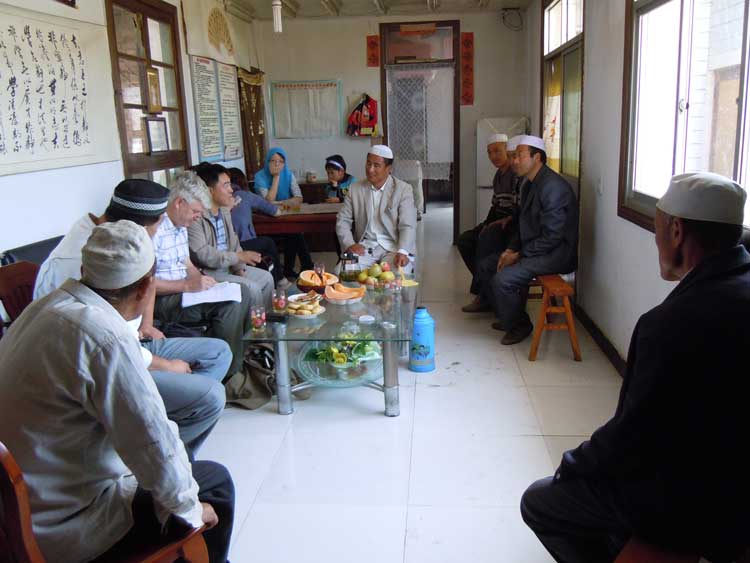
 I spent five weeks this summer undertaking research in Beijing and Gansu thanks to a UK-China Fellowship for Excellence from the Department for Business, Innovation and Skills. The central purpose of my research was to explore the information and communication needs of poor and marginalised communities, especially people with disabilities (in Beijing) and farmers in rural areas (in Gansu Province). I learnt so much – and probably more from the informal discussions than I did from the focus groups and interviews that I conducted! Many thanks are due to Professor Ding Wenguang and Chen Fei for all of their help and assistance in arranging meetings, and translating our dialogues.
The premises underlying my research were that:
- all too often, new software and hardware are designed for the mass market, and then need to be ‘adapted’ to suit the ‘needs’ of poor and marginalised people
- frequently, well-intentioned new technologies are developed in some of the richer parts of the world and then ‘applied’ in poorer countries; researchers are then surprised that there is little take up for their products
- hence, we still need to get a much better understanding of the needs of these communities, and focus much more on designing technologies explicitly with their interests in mind
- China has 18% of the world’s population, and so the market size of marginalised communities makes it worth developing products commercially for them
The resultant data are so rich that it is difficult to summarise them in detail. However, the following seem particularly pertinent
Rural areas
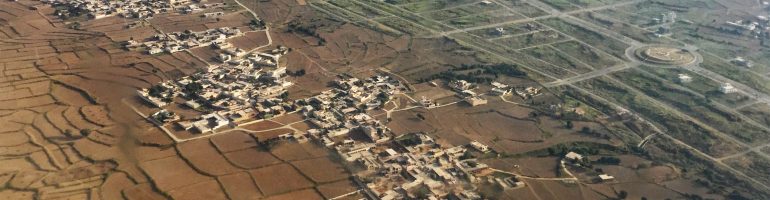
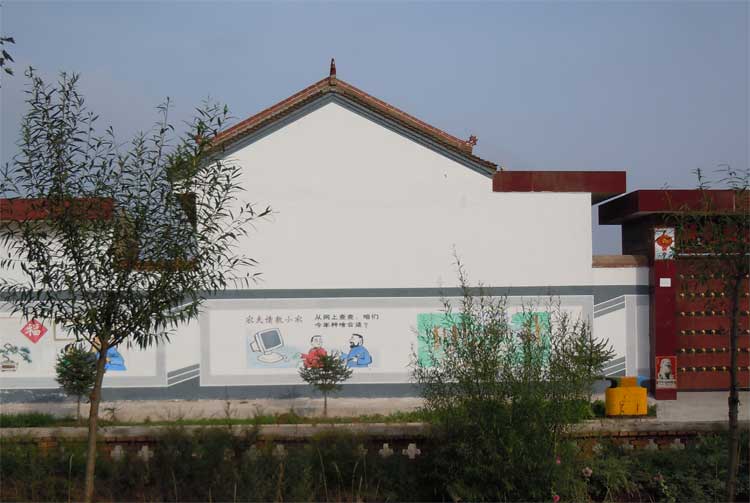
 The diversity of people and communities in rural areas of China is replicated in a diversity of needs. ‘One size fits all’ solutions are not appropriate, yet the size of the market for particular groups is nevertheless very large given China’s overall population
- Almost everyone already has at least one mobile ‘phone – mobiles are already widely used for information and communication, even for Internet access. There are real implications for Africa – if electricity and connectivity can be provided
- Economic information is particularly desired – especially on such things as agricultural input prices and market prices – particularly by men. I was surprised at how dominant and significant this was.
- There seem to be important gender differences in usage – women placed greater emphasis on social communication and health information; young male migrant workers in contrast seemed dominated by a desire to use mobile broadband to meet with girls.
- Value for money is important – c. RMB 2-3 per month is all that most people are willing to pay for subscription services
- Trust of source of information is also very important – there seems to be a lot of bogus messaging – and differing views as to what kind of organisation was most trustworthy.
- There is real potential for village level training in effective use of mobiles – especially by women for women
- For many users, the existing functionality of mobiles is more than they can cope with
Disabilities
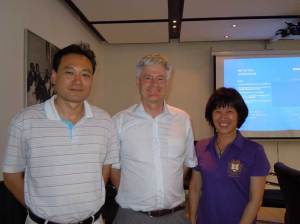 There is huge potential for innovative hardware and software solutions – many interesting ideas were proposed
- There is therefore a large opportunity for sharing good global practice with colleagues in China in the use of ICTs for people with disabilities in China
- Information about location and direction is crucial for blind people – we need to think more innovatively about how to deliver on this
- Screen size and configuration (not touch screen) are very important for blind people – Blackberry wins out over iPhones here!
- There is an enormous opportunity for audio books (not only for blind people). Perhaps a civil society organisation could develop this, and even market audio books to generate income.
- Security code challenges are important for blind people
- Shopping information – much potential for RFID and 2D bar codes for blind people.
- A powerful text scanner and reader in a mobile phone for blind people would be useful
- Visualisation and touch/vibration of sound could also be developed further
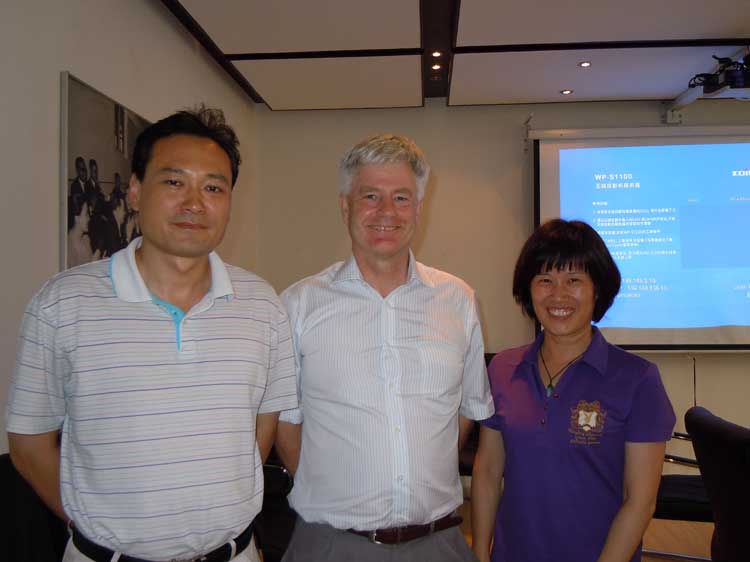
There is a huge agenda ahead, and I am enthusiastic about ways in which we can encourage delivery on some of these exciting opportunities. Thanks so much to BIS, Lanzhou University and Peking University for supporting this research, and to all those who contributed through their wisdom and hospitality
The CTO’s Panyard Experience
The Commonwealth Telecommunications Organisation’s 2011 Forum finished this evening with a wonderful Panyard Experience in Port of Spain hosted by the Ministry of Public Utilities of Trinidad and Tobago. This told through music and dance the history of the steel band, and finished up with an extravagant celebration of Carnival, thanks to Ronnie and Caro’s beautiful 2012 ‘collection’. There was also an amazingly impressive display of limbo dancing – if only my body was 40 years younger!
Filed under Photographs
US poverty: a good example to follow?
Official US date recently released shows that the number of US citizens living in poverty rose to a record 46 million last year. Yet the world is encouraged to believe that the US model of ‘democracy’ and ‘economic growth’ is the one that should be followed to eliminate poverty. Surely there is a contradiction here?
The BBC reports the release of these data as follows: “The number of Americans living in poverty rose to a record 46.2 million last year, official data has shown. This is the highest figure since the US Census Bureau started collecting the data in 1959. In percentage terms, the poverty rate rose to 15.1%, up from 14.3% in 2009. The US definition of poverty is an annual income of $22,314 (£14,129) or less for a family of four and $11,139 for a single person. The number of Americans living below the poverty line has now risen for four years in a row, while the poverty rate is the biggest since 1993. Poverty among black and Hispanic people was much higher than for the overall US population last year, the figures also showed. The Census Bureau data said 25.8% of black people were living in poverty and 25.3% of Hispanic people. Its latest report also showed that the average annual US household income fell 2.3% in 2010 to $49,445. Meanwhile, the number of Americans without health insurance remained about 50 million. The data comes as the US unemployment rate remains above 9%”.
Is it not time that global organisations, aid agencies, and governments across the world stopped pretending that economic growth leads to a reduction of poverty? Capitalism fundamentally depends on the maintenance of inequalities: between rich and poor countries, between rich and poor people. The increase in US poverty revealed in these data reinforces such arguments. The US ‘system’ enables Bill Gates and Warren Buffet to acquire huge wealth, while large numbers of their compatriots are consigned to poverty.
Freedom carries responsibilities. The focus of US capitalism on the freedom of the individual at the expense of the wider public good is surely not a model that the world should be encouraged to follow. As the BBC report notes, 50 million people in the US do not have health insurance. While the rich can have the benefit of the latest medical research, such care is beyond the means of the poor.
These figures should be seen as a wake up call to economists and politicians across the world. Unfettered capitalism, fueled by a self-reinforcing cycle of individual greed, can never lead to a reduction in poverty. Only when governments act explicitly to support the most marginalised in their societies can we begin to redress the balance.
Filed under Development, Politics
Shadow Scholars, plagiarism and academic merceneries
Ages ago a friend, knowing of my interests in the extent of plagiarism in higher education, sent me a link to an article in the Chronicle of Higher Education entitled The Shadow Scholar: the man who writes your students’ papers tells his story. In a nutshell, this tells ‘the story of how he makes a living writing papers for a custom-essay company and to describe the extent of student cheating he has observed’. Although it refers primarily to the US context, it provides a salutary tale for all those involved in helping university students to learn. Above all, it should remind us that such practices are becoming increasingly commonplace. In the month that followed its original publication, the report attracted 640 comments, and these are also well worth a read.
On re-reading it today, I am even more convinced that it should become required reading for academics and students alike!
Filed under Education, Higher Education
Dongsi Jiutiao – hostel and red dining
One of the pleasures of Beijing is the opportunity to explore its numerous hutongs – narrow streets surrounded by low rise courtyard buildings, known as siheyuan. As most guidebooks say, many of the hutongs have been destroyed to make way for new high-rise development, but some still retain their traditional character, and others have been redeveloped specifically with the tourist in mind. Traditionally, hutongs were 9 metre wide streets, with some dating from as early as the Yuan Dynasty (1206-1341), and until the middle of the 20th century they provided the basic residential areas of most of Beijing.
Following a day exploring Ditan Park, the Lama Temple, the Confucius Temple and the Imperial College, we wandered south to have dinner at the Red Capital Club on Dongsi Jiutiao, which had been recommended by friends. Everyone says it is difficult to find, but that was not our experience. Head south from the Zhangzizhonglu subway station and take the first hutong (Dongsi Jiutiao) immediately to the east (left as you head south!). The Red Capital Club is then about 400 metres along on the south side of the road.
Anyway, we arrived too early, and decided simply to wander on to see if there might be anywhere we could sit down for a cold Tsingtao beer. A short distance on, to the north of the road, we came across an amazing find – the Happy Dragon Courtyard Hostel at 51 Dongsi Jiutiao (note this is at a different location from the hostel mentioned on their website! Phone: +86 (10) 84021970). Although we only sat in the bar, we looked into the rooms which seemed very clean and well maintained. As well as dorms sleeping 6 people (RMB 90), they also had double rooms at only RMB 300 a night – amazing value for August (although the advertised rate was RMB 498). The bar itself was in the centre of the courtyard, full of comfortable chairs, and served a good range of beverages – the beer was definitely cold and refreshing! Its WiFi service was particularly popular – and people from many different nationalities were logging on to their emails and Internet! All in all, we reckoned that it would be a great place to stay for those on a limited budget.
The Red Capital Club itself was also definitely an ‘interesting’ experience. It is intended to reflect the life of the ruling elite in China in the 1950s. As its website comments, “The immaculately restored compound captures the mood of the 1950s when China was driven by idealism. The lounge cigar divan is like stepping into Mao’s private meeting room. The furnishings were originally used by the central government in the 1950s. Two sofas next to lounge door were actually used by Marshal Lin Biao (Mao’s fated successor who lost out in an attempted coup). A poem of Mao’s adorns one wall and a photograph of Deng taken by his daughter and presented to the club another”. The decor is now a little faded, and the food quite expensive, but it was definitely worth the visit. They even had a bottle of Marsanne from the Caves de Tain in the Rhône Valley – which tasted remarkably good (although that could have been related to the fact that it was the first white wine I had tasted for almost a month!).
Filed under Beer, China, Photographs
On ‘retirement’…
Around 18 months ago, Royal Holloway, University of London offered a severance/early retirement deal for staff, and after much reflection I decided to apply. My application was accepted, and I will therefore be ‘leaving’ the College in the autumn after 30 years working there – although I am delighted that I have been appointed as an Emeritus Professor, and so I will still be retaining very close links involving both teaching and research!
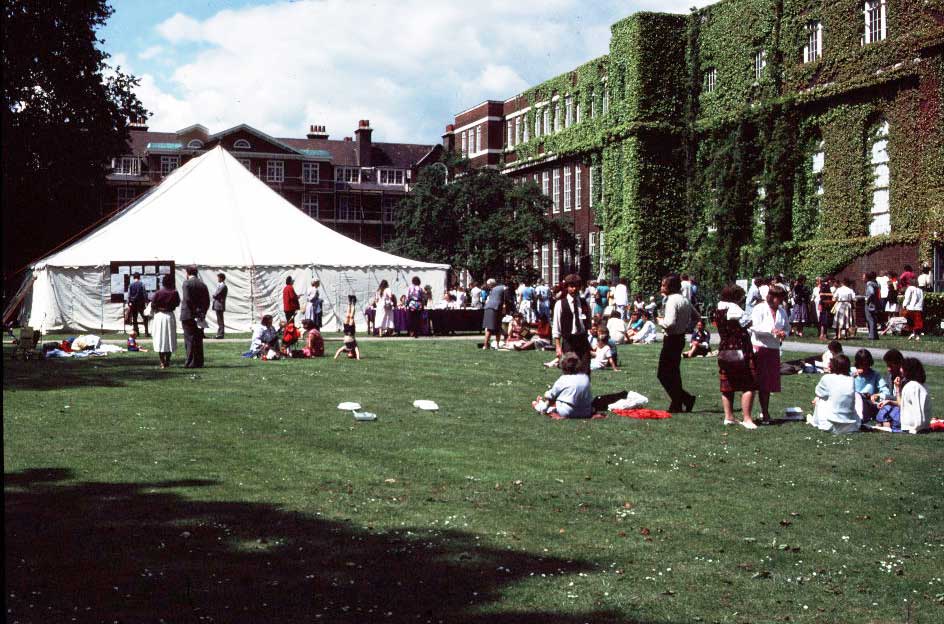 Many friends have asked why I have chosen to leave, and so I thought I would share my reflections here. They say much about the state of British higher education in the 21st century. I was appointed to Bedford College back in 1981, and have many great memories of my times both there and in the merged institution of Royal Holloway and Bedford New College. It has been a wonderful place to teach and do research, and I have had some amazing colleagues. However, UK universities have changed so much in this period that I no longer feel that I can really achieve what I want to do within the confines of this environment. Let me try to explain why. I guess there are five main reasons for my decision:
- a decline in collegiality amongst academics within universities
- changing student attitudes to being at university
- institutional and individual approaches to learning and teaching
- a failure to promote Geography as the important discipline that it is
- institutional leadership
The decline in collegiality
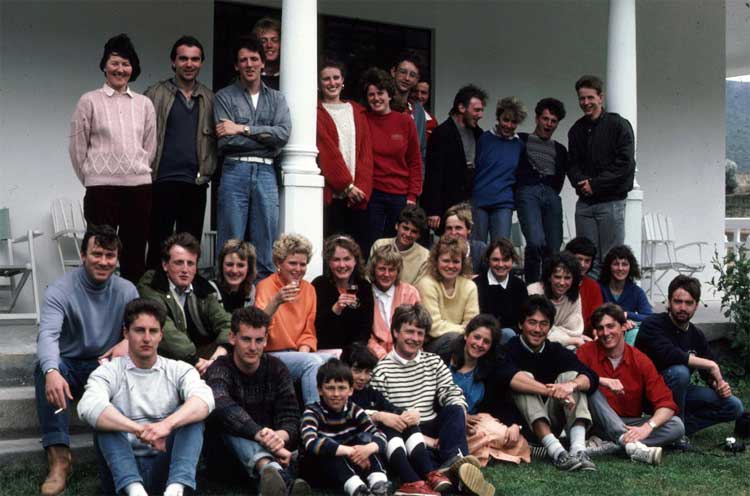 One of the main reasons I am leaving is quite simply because the sense of collegiality that I participated in as a young academic has been eroded to such an extent that I no longer enjoy the spirit of shared intellectual adventure that lay at the heart of university life when I began my career. Many academics are now so absorbed in advancing their own careers that they have almost no time for their colleagues or their students. Long gone, for example, are the mid-morning and late-afternoon coffee and tea breaks when administrative, technical and academic staff would all come together to share a few minutes of each other’s company.
At the time of the merger of Bedford and Royal Holloway Colleges in the mid-1980s, I explicitly chose to live near the campus so that I could participate fully in its life – and be collegial. Rather few people now do so. Many ‘colleagues’ live far away and seem to spend more of their working lives off campus than they do on it. Colleagues who absent themselves are not there to support the students, are not there to attend seminars, are not there to answer the inevitable minor queries, are not there to share research ideas, and are not there to support each other. What has really saddened me is the way in which some young colleagues claim to be collegial and yet their actions seem to suggest that they have no idea what the word means.
 Perhaps I was foolish not to be more careerist myself, but what I loved was my research and teaching, and all that mattered was that I should earn the respect of my colleagues and students for what I did. When I returned to Holloway in 2004 after my secondment to DFID, I therefore specifically created a ‘Collective’, to try to rekindle that mutual support for colleagues and students that I had valued so much – and still believe in. Ultimately this has not really succeeded in the way I had hoped, in part because it runs counter to the selfish arrogance that drives so many academics today. It also saddens me that some young academics expect me – as a professor – to be hierarchical and cannot understand that I truly believe in the communal values that lie at the heart of sharing knowledge.
As for the causes of this changed mentality, it is clear that the fragmentation of unified pay scales, the introduction of the research assessment exercise, and increased competition between departments and institutions for the ‘best’ academics have all played their part. However, we as academics are also to blame, in that we have not stood up to these changes vehemently enough, and have insufficiently emphasised the critical importance of collegiality in our endeavours. That having been said, I should also say without any hesitation that there are some brilliant young academics in our department, who are indeed collegial. Their life is tough, very tough, and I wish them well in trying to retain their humanity and love for the discipline.
Student attitudes
 Throughout my career, I have vacillated between being angry that many students do not work hard enough, and being sorry for them that our society has shaped them in this way. More often than not, I have sympathised with them, and done my best to enthuse them with my love for Geography, and the crucial importance of rigorous academic enquiry. Perhaps I am retiring in part because I taught second year human geography techniques for too long! Excessive alcoholic indulgence by some students after sports fixtures the previous day, often meant that half the class was absent for my techniques lectures on Thursday morning, and many of those that were there seemed disinterested in participating. Small wonder that they had difficulties doing the practical classes; small wonder that many did poor dissertations.
The average number of hours that students study a week during term time in the UK is somewhere between 25 and 30. My expectation of a minimum 40 hours work a week is thus way beyond this, and I have not found a way of reconciling these figures. I love teaching, but after 30 year of hitting my head against a brick wall, I now want to spend time teaching students who really seem to care about their learning. Having taught at Peking University recently, where many students seem to spend more than 60 hours a week studying, I feel re-invigorated. It is scarcely surprising that the Chinese economy is so much 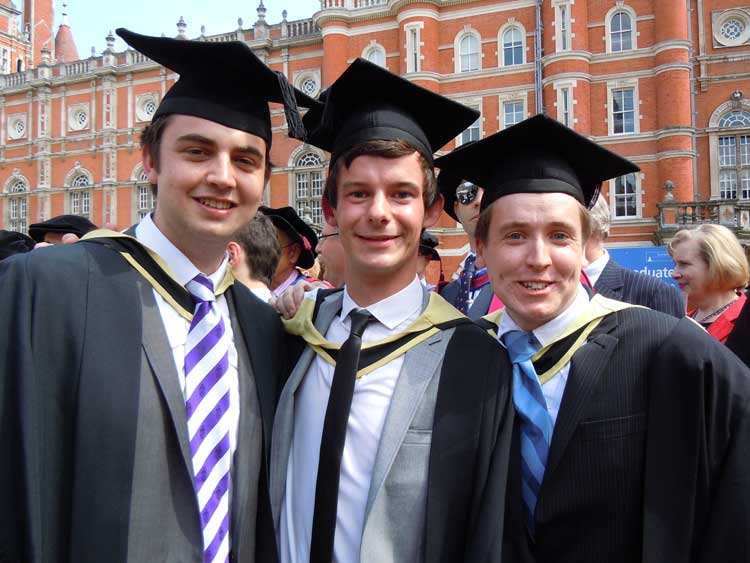 more vibrant than is ours in the UK. All this having been said, we do indeed have some able, keen and enthusiastic students in our department – and I will miss them. They are just too few in number! It was brilliant, though, how some of them responded when I offered to teach an extra-curricula course entitled “Critical Practices: an exploration of ideas in Critical Theory and Revolutionary Practice” more than a year ago now. This was learning and teaching how I wish I could have done it more often. The course was completely outside the normal curriculum, counted for nothing towards their degree assessment, and was based around discussions between us all. I enjoyed it hugely, and think that they too seemed to gain something from it.
Approaches to learning and teaching
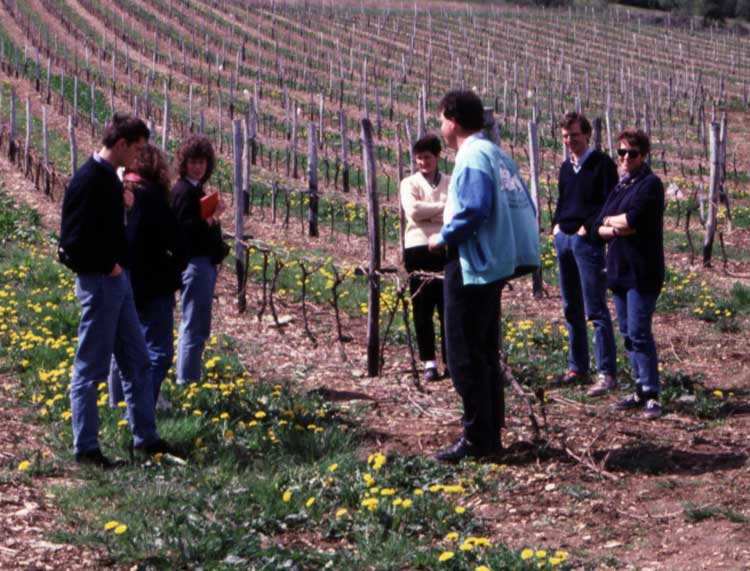 I have always believed that universities should be about sharing ideas at the frontiers of knowledge, that such intellectual enquiry is therefore challenging, that standards of assessment should be maintained, and that it is essential to treat students as human beings if we are to encourage the critical enquiry that I value so much. So many of these values have fallen by the wayside: in order to make courses popular they often take the form of learn and regurgitate; in some courses students are more or less told what questions to expect in the exams; students have to be treated as numbers in the name of fairness; we have to send them to ‘experts’ if they have personal issues, rather than first trying to help them ourselves; and we have devised mechanisms for ensuring that they get higher grades than they would have achieved in the past, so that out institutions climb up the various rankings in terms of results and added value! I am often seen as a harsh marker, but why should I change my expectations in a world that is moving towards mediocrity?
The amount of teaching that academics do has been vastly reduced in large part because hitting the research assessment criteria is seen as being more important. I am probably the only member of staff in our department who gives non-assessed essays to the final year students doing my course. Around two-thirds of the marks for most courses remain as being based on unseen exams at the end of the year, and yet we do not give students time to practise and have feedback. My non-assessed/formative essays are seen by some students purely as being an extra burden of work, rather than as an opportunity for them to learn how to write better essays! I believe that all undergraduates should have to write an essay a week (or produce a similar assignment in subjects where essay writing is not normal practice), and that we should mark them and provide feedback. How else are they going to improve?
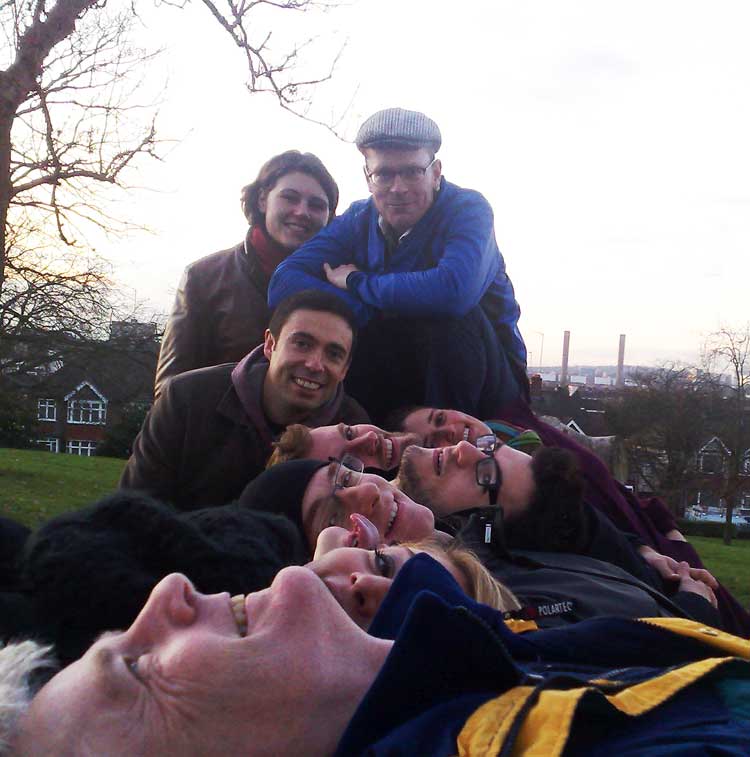 Likewise, I have always expected that undergraduate dissertations should be based on at least a month’s fieldwork. Yet, many years ago I recall a younger colleague saying that given the pressures that students have to earn income during the vacations it was unrealistic for me to expect such high standards. So it has increasingly become acceptable for dissertations to be based on a handful of interviews, rather than the detailed rigorous field research that I once expected. This does not only apply at undergraduate level, but I have also recently been dismayed at the quality of several PhDs that I have examined. Not only have I identified clear plagiarism in some, but also the amount of field research on which others have been based is totally paltry compared with what I expect from my own students.
In a different but related vein, I have always sought to entertain students for dinners and BBQs at our home, in part to get to know them better so that I can write honest references about them, but also to show that I am human, and care about them as individuals. Yet, this behaviour is frowned upon by several of my colleagues. I was therefore very deeply honoured that our students should nominate me successfully for an Apple for the Teacher award from our Students Union this year – this is the greatest complement that they could possibly have paid me, and is one of my most treasured achievements in my 30 year career.
The Place of Geography
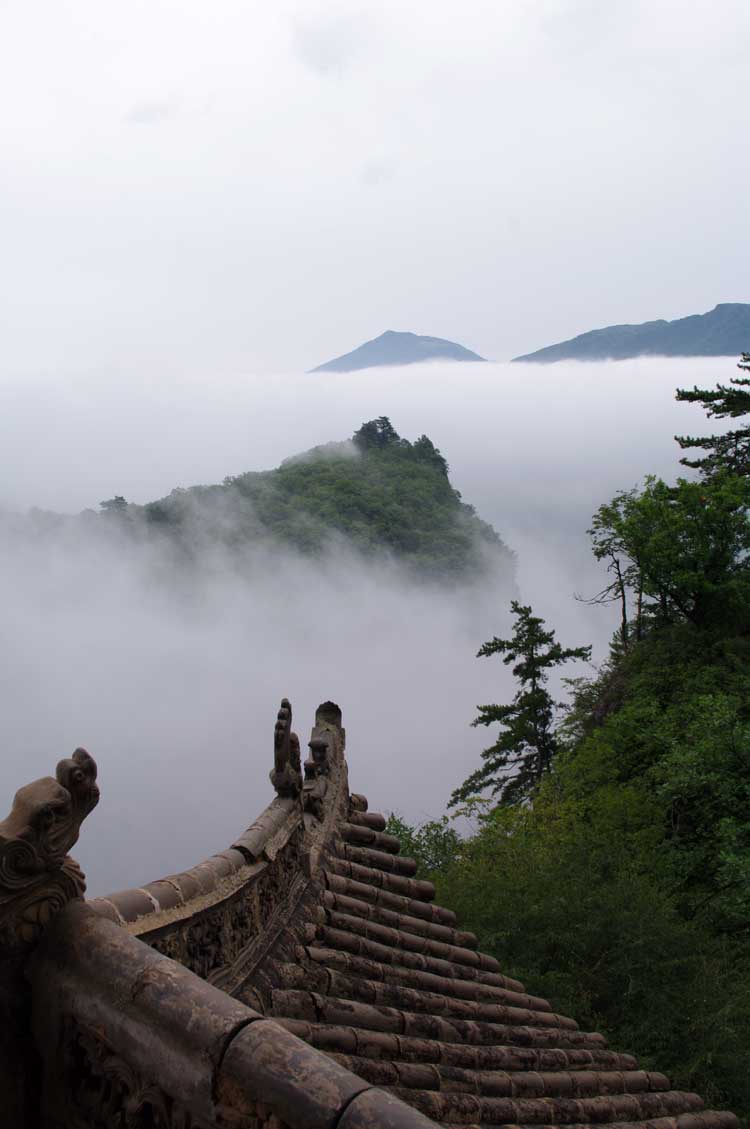 I read this morning in an e-mail from our Head of Department that Geography has now dropped out of the top ten subjects in the UK in terms of the number of students studying at A level; numbers have fallen from 32,063 to 31,226 from 2010 to 2011, a drop of 2.6% in a single year. This is incredibly sad, and only reinforces the arguments that I made in a recent publication (The role of Geography and Geographers in policy and government departments, in Agnew, J. and Livingstone, D.N. (eds) (2011) The Sage Handbook of Geographical Knowledge, London: Sage, 271-284) about how academic geographers have largely failed to engage externally with the public, with politicians, and with schools. I have always sought to champion the subject in schools and the wider political arena – as reflected in my early work for the Geographical Association – indeed, that was what my book The Place of Geography was explicitly intended to do!
I am also saddened at the way in which many geographers seem so unwilling to defend what to me lies at the core of our discipline: an engagement with the ways in which humans interact with the physical world, and an understanding of how we thereby construct particular places. By building their careers increasingly on a few tiny areas of intellectual enquiry, geographers have all too often moved away from what I still see as the essence of our discipline. I have always been fascinated by new ideas – often at the interface of disciplines – and enjoy being able to engage across many different intellectual areas. So, having worked for 30 years, I now find myself increasingly at odds with the views being advocated by many, but by no means all, of our disciplinary leaders. Rather than continuing to swim against the tide, I am ‘retiring’ to enable me to do the research, teaching and practical work that I believe in. There is so much still to be done.
Institutional leadership
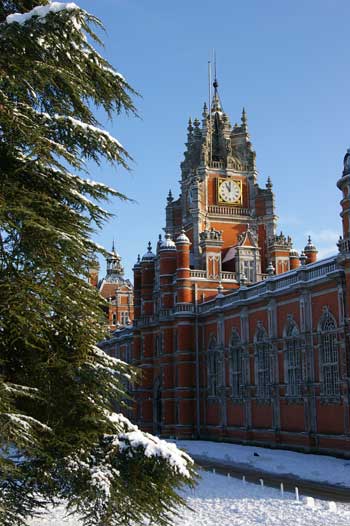 Finally, I decided to retire because I was disappointed in the specific institutional leadership in place at Royal Holloway at the time I took the decision. University Vice Chancellors are a motley crew. Some, but all too few, are outstanding. I do not envy them the task – it is immense and complex – but Vice Chancellors and Principals have to show real leadership qualities, they must champion intellectual excellence above all else, they must be wise, they must be fair and transparent, and they must be collegial. Quite simply, I was no longer convinced that I could achieve the things I wanted to do – especially for the ICT4D Centre – within the confines of the institution where I was. I felt so much more valued by those outside the institution than I did within it! At the time, I did not know that we were about to have a new and dynamic Principal, and I am certain that Holloway is on the way up again, having fallen dramatically in profile and achievement under the previous regime.
It is obviously with regrets that I am retiring from Royal Holloway, University of London. I have a huge number of very fond memories – of some amazing colleagues, and great students. I am indeed therefore delighted to be continuing as an Emeritus Professor, and in this capacity will do all I can to support the institution that I have loved and sought to support for the past 30 years.
Filed under Geography, Higher Education
Exploring Wuwei
Thanks to the wonderful hospitality of my assistant Chen Fei’s family, we were introduced over the last couple of days to the fascinating diversity of the area in the vicinity of Wuwei, in north-west central Gansu. The city is situated along the Hexi corridor, leading westwards into central Asia, and has been subject to numerous cultural influences. We had a kaleidoscope of experiences, including visiting the tomb where the famous bronze galloping horse treading on a flying swallow was found, wandering around the Confucius temple in Wuwei, walking in the desert at the edge of the city, learning all about how to serve and drink different types of Chinese tea, and then finishing up walking in the mountains near Tianzhu and being entertained by Tibetan dancers over lunch. It was a brilliant time, and owed everything to the generosity of our hosts.
Filed under China, Photographs
Arrival in Lanzhou
We arrived in Lanzhou from Beijing last night. What a difference from my last visit almost exactly six years ago! The Yellow River remains the same, but the number of high rise buildings and the amount of traffic are vastly increased. Two dinners and a lunch later, the food has been wonderful – thanks so much to the generous hospitality of our hosts. Today was relatively relaxed before we go out into the field on Monday – an opportunity to see some of the efforts of the local government to beautify the banks of the river: reconstructions of the old waterwheels, Longyuan park dedicated to dragon culture, statues of traditional folk stories, and a new wetland park full of beautiful flowers and walkways through the rushes.
Filed under China, Photographs
From cherry blossom to lotus flowers
When I was in Beijing in the Spring, the city was full of cherry blossom and magnolia flowers. Now in hot, humid August there are not many flowers of any kind out, but the lotuses and water lilies on the lakes in Beihai Park and the Summer Palace add a splash of colour – especially above the weeds and debris in the not all-too-clean water…
Filed under China, Photographs

 Tim Unwin's Blog