The first morning at ICTD2010

Thanks to everyone for getting ICTD2010 off to such a great start.  I just want to thank the whole team of postgraduates, undergraduates and visitors acting as staff for everything that they have done, as well as the registration team who have processed everyone so efficiently!  Brilliant effort and team work!

Below are some shots from the morning’s sessions

This slideshow requires JavaScript.

On-site arrival now open for ICTD2010

The bag-packing is over, the rooms are prepared, and delegates have started to arrive at ICTD2010!  Thanks to all of the helpers who have put everything together, and especially to Sandie and Annieka for managing the registration process.  Come and get your badges, registration packs and meal tickets!

This slideshow requires JavaScript.

Packing Bags for ICTD2010

Very many thanks to Caitlin, Ati, Ben and Ettie for all of their help in packing the delegate bags for ICTD2010 this morning!  Given the larger than expected numbers attending, not all delegates will be able to have the full suite of sponsor materials in their bags, but the first 550 delegates to collect bags will indeed have a bag, hard copy programme and digital card with the papers, programme and session materials on it!

This slideshow requires JavaScript.

Monitoring and Evaluation of ICT in Education initiatives: reflections from WISE

The second WISE (World Innovation Summit for Education) summit provided an opportunity for colleagues from Education Impact to host a lively and highly participatory workshop designed to contribute to more effective monitoring and evaluation of ICT in education activities, focusing particularly on developing countries.

It was premised on two assumptions:

  • that there is too little monitoring and evaluation of ICT for education initiatives, and much of what is undertaken is of poor quality; and
  • that it is important to differentiate between monitoring (the process of continuing self-reflection within organisations and individuals aimed at improving their performance) and evaluation (the review of outcomes against targets, often undertaken by external agencies)

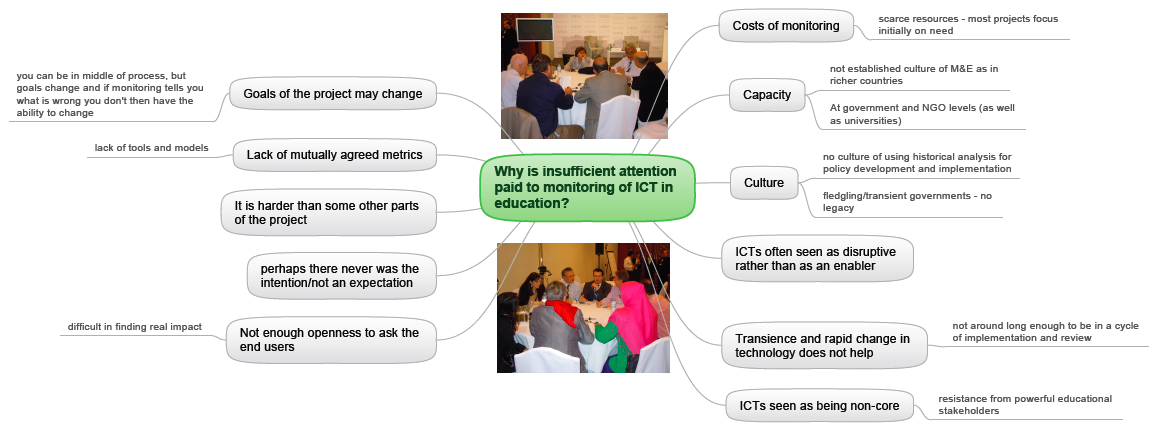
The workshop began by identifying the reasons why there is so little effective monitoring

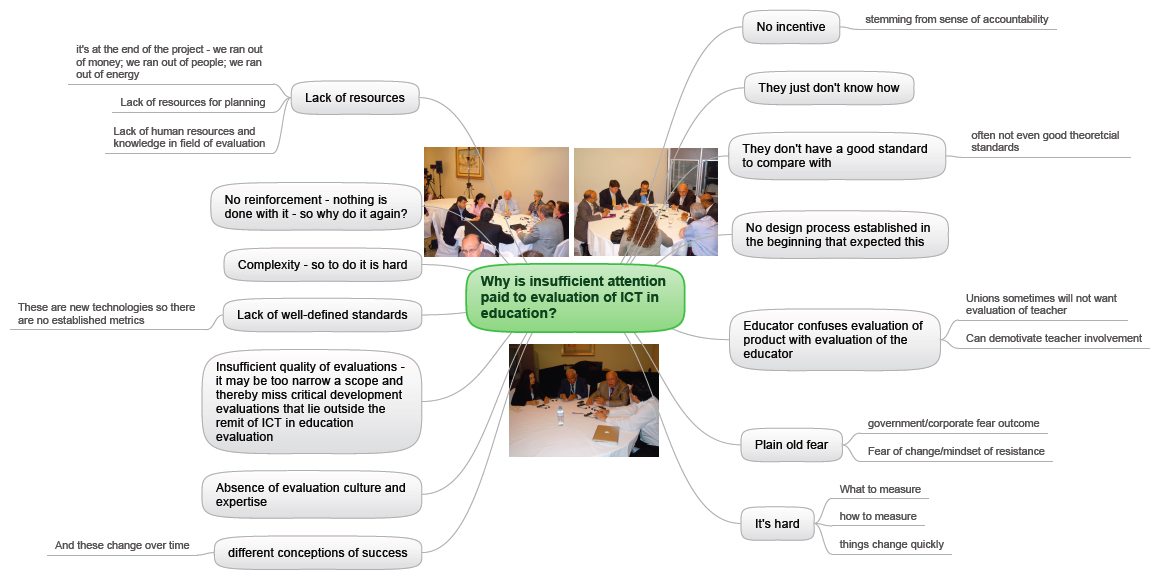
and then why there is so little good and effective evaluation

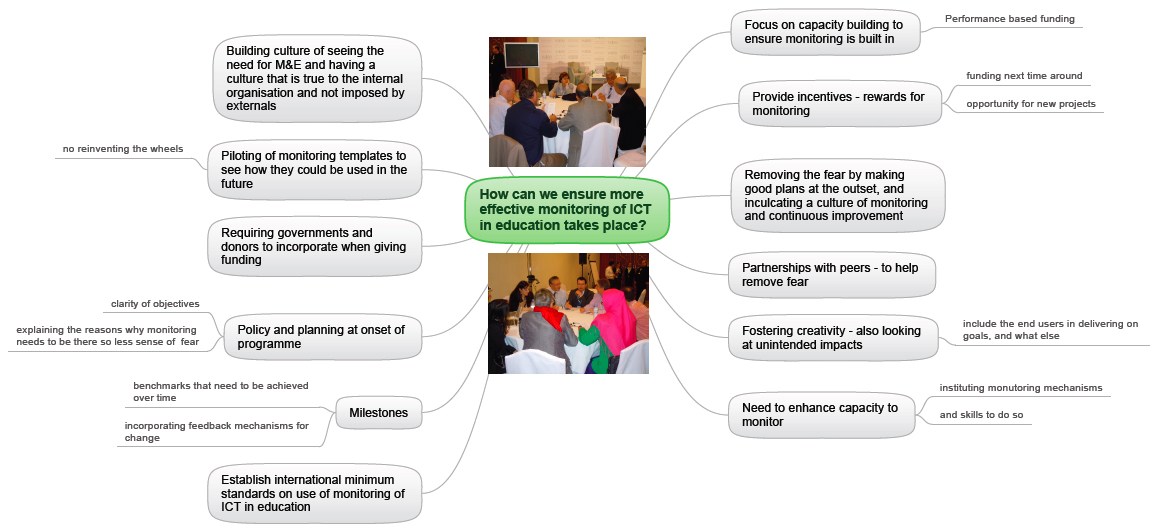
This was then followed by a discussion of how we can ensure better monitoring

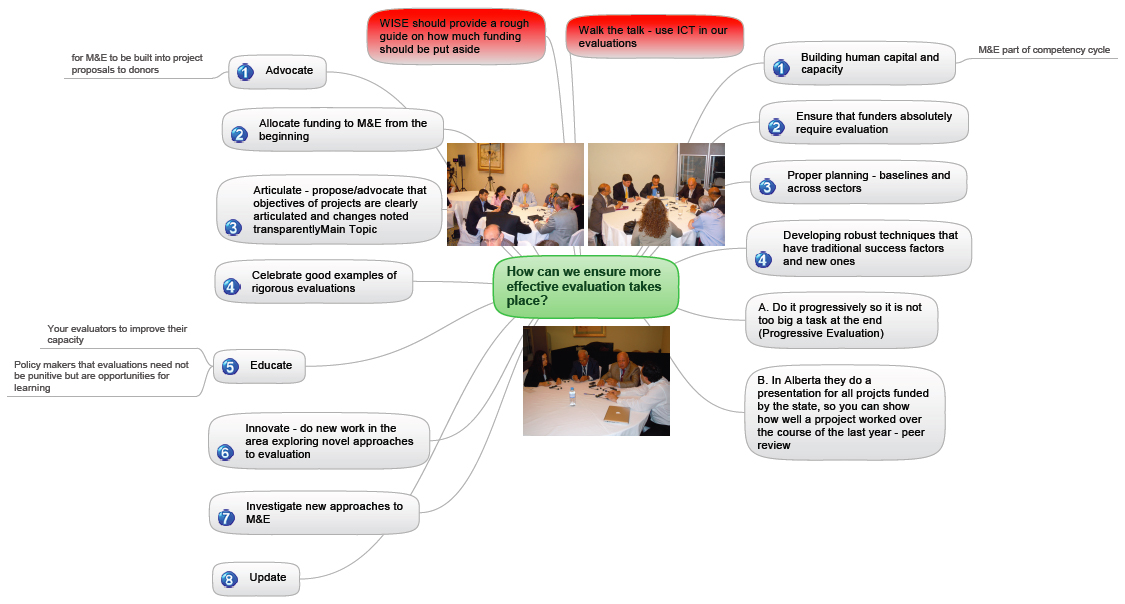
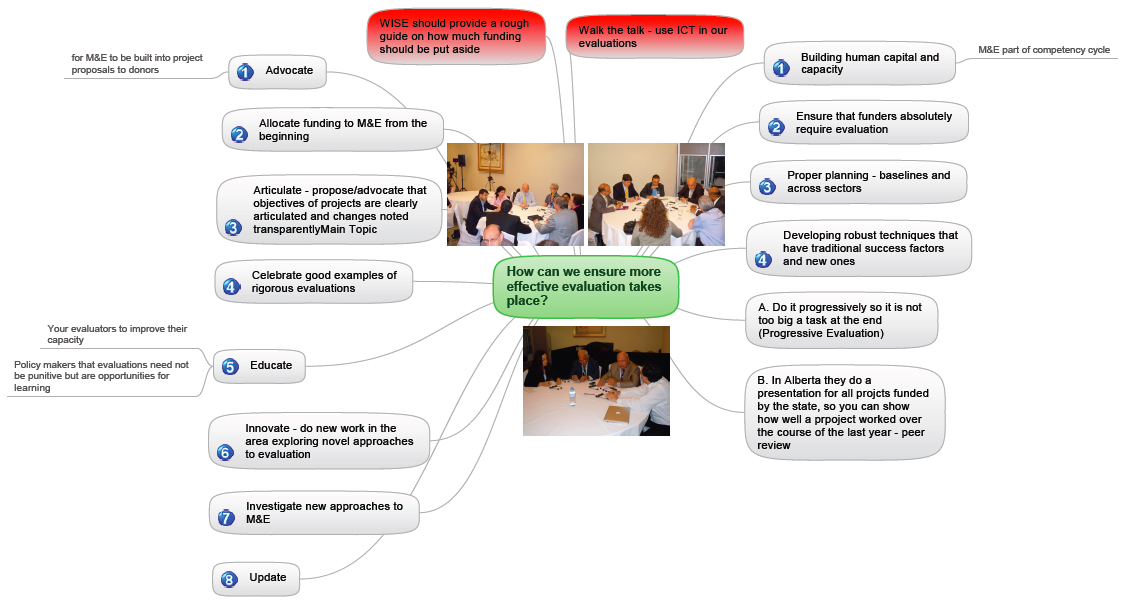
and the things that need to be put in place to ensure better evaluation.

Clicking on the above mind-maps enables them to be viewed at full size!

ICTs, citizens and the state: moral philosophy and development practices

Great to see my latest paper just published in The Electronic Journal on Information Systems in Developing Countries – thanks to Mark Levy and Vignesh Ilvarasan for all their editorial work on this.

The paper examines the moral implications of the use of ICTs in e-government initiatives, focusing especially on national databases, identity cards, and surveillance technologies. It suggests that in resolving debates over these, we need to reach ethical resolutions concerning notions of trust, privacy, and the law. It also draws attention to the ethical problems that emerge in linking the notion of of Universal Human Rights with the introduction of ICTs in developing countries.

As I argue in the paper, “The really difficult ethical questions that arise from this are about how we judge whether it is better for poor and marginalised communities for such egovernment initiatives to have been introduced, or whether they might actually be more advantaged if their governments did not spend vast sums of money on their implementation. Just because it is possible to implement national citizen databases, to use biodata for ID cards, and to introduce sophisticated digital surveillance mechanisms does not mean that it is right to do so”.